Education is undergoing a digital transformation. The pandemic accelerated the adoption of online learning, and now AI, VR, and data-driven platforms are redefining how students engage with content worldwide.
AI tutors personalize learning paths, helping students grasp complex topics at their own pace. Virtual Reality takes it further—transporting learners into historical events, scientific simulations, or engineering labs without leaving the classroom.
EdTech giants like Coursera, Khan Academy, and Duolingo continue to expand globally, offering high-quality education across borders. Meanwhile, universities are embracing hybrid learning models, blending digital platforms with in-person instruction.
The global reach of education technology also addresses inequality. Students in remote or underdeveloped regions can now access world-class lectures and interactive materials. However, digital literacy and internet access remain barriers.
As innovation continues, the future of education looks borderless, inclusive, and interactive—preparing the next generation for an increasingly digital world.




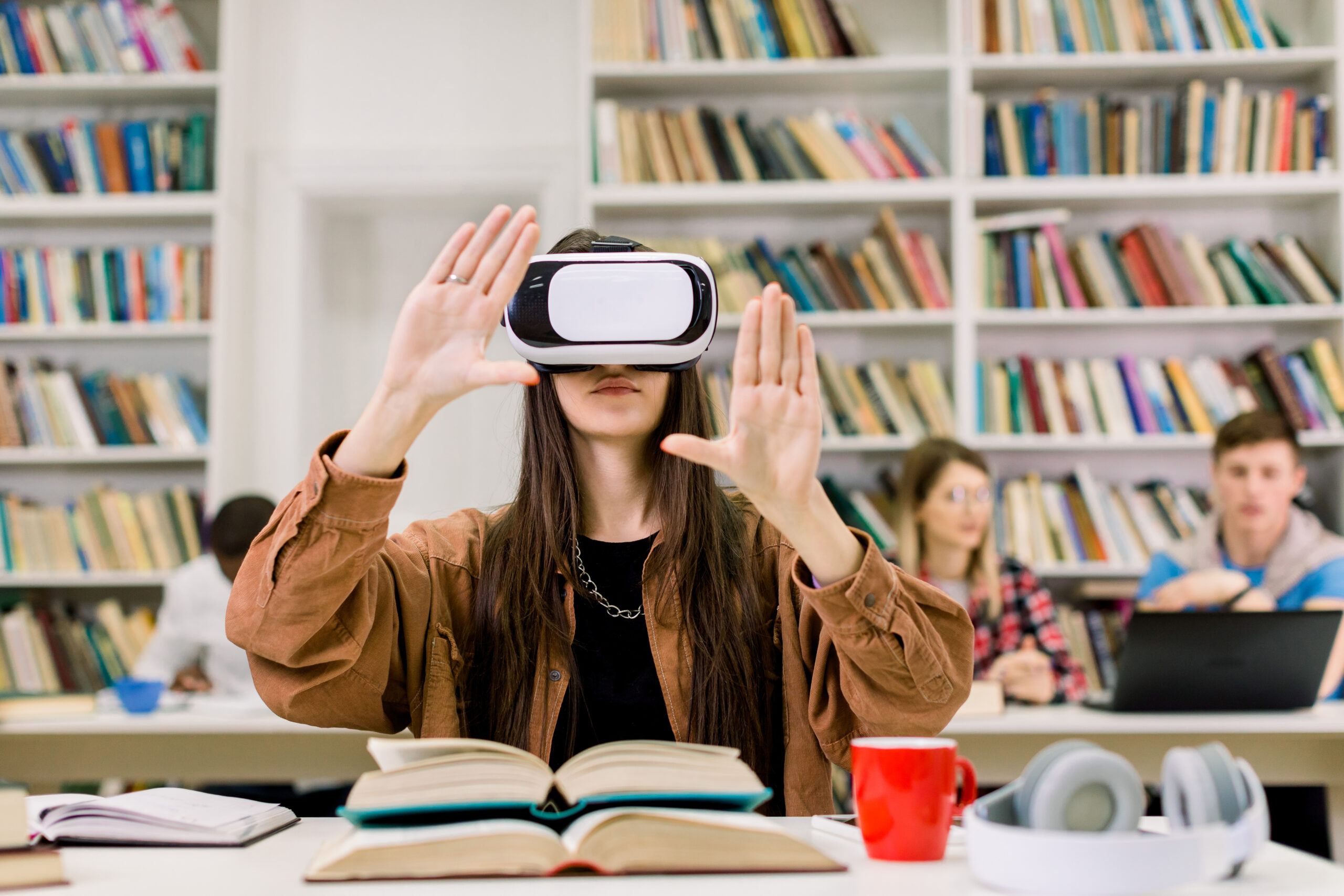 Young Caucasian brunette girl student working with VR simulator in library. Young woman in casual wear and virtual reality glasses sitting at desk and touching air. VR goggles for studying concept.







No Comments